Dermal Fillers Dublin | Honest Doctor's Guide | Amara Clinic



The most useful thing I can tell you about dermal fillers is what they can’t do — the best filler work I do is decided long before a needle appears.
If you’re searching for dermal fillers in Dublin, you already know what you’d like to change — lips that have lost fullness, cheeks that have flattened, a jawline that’s softened, an under-eye shadow that won’t lift. When volume is truly the issue, filler can be genuinely transformative. It can also do nothing, or even make things worse, when it’s used on the wrong concern for the wrong reason.
So this is the honest version. What filler is, which areas of the face it genuinely suits, what it costs in Dublin, how long it lasts — and the part most clinics leave out: where I won’t put it, and what I recommend instead when filler isn’t the right tool. That’s the conversation that happens at every Amara consultation, written down.
What dermal filler actually is
Dermal filler is a soft gel made of hyaluronic acid — a sugar-chain molecule your skin already produces, and one that holds water and volume remarkably well. Injected carefully, it restores the volume that age, genetics or both have taken away: it refills a hollow, redefines an edge, rebuilds a contour.
Three things about it matter more than any brand name. It’s temporary — your body gradually breaks it down, which is a feature, not a flaw. It’s dissolvable — an enzyme can remove it if a result isn’t right, a safety net I lean on more often than you’d think when people arrive with work done elsewhere. And it’s volume, not movement — filler softens the look of hollows and lost definition, while anti-wrinkle injections relax the muscles that cause expression lines. Different tools, different problems, often used together.
What filler is not: permanent, painful-to-commit-to, or a one-size treatment. Every face takes a different amount in different places — and the faces that look “done” almost always got too much of it, in the wrong layer, chasing a result filler can’t deliver.
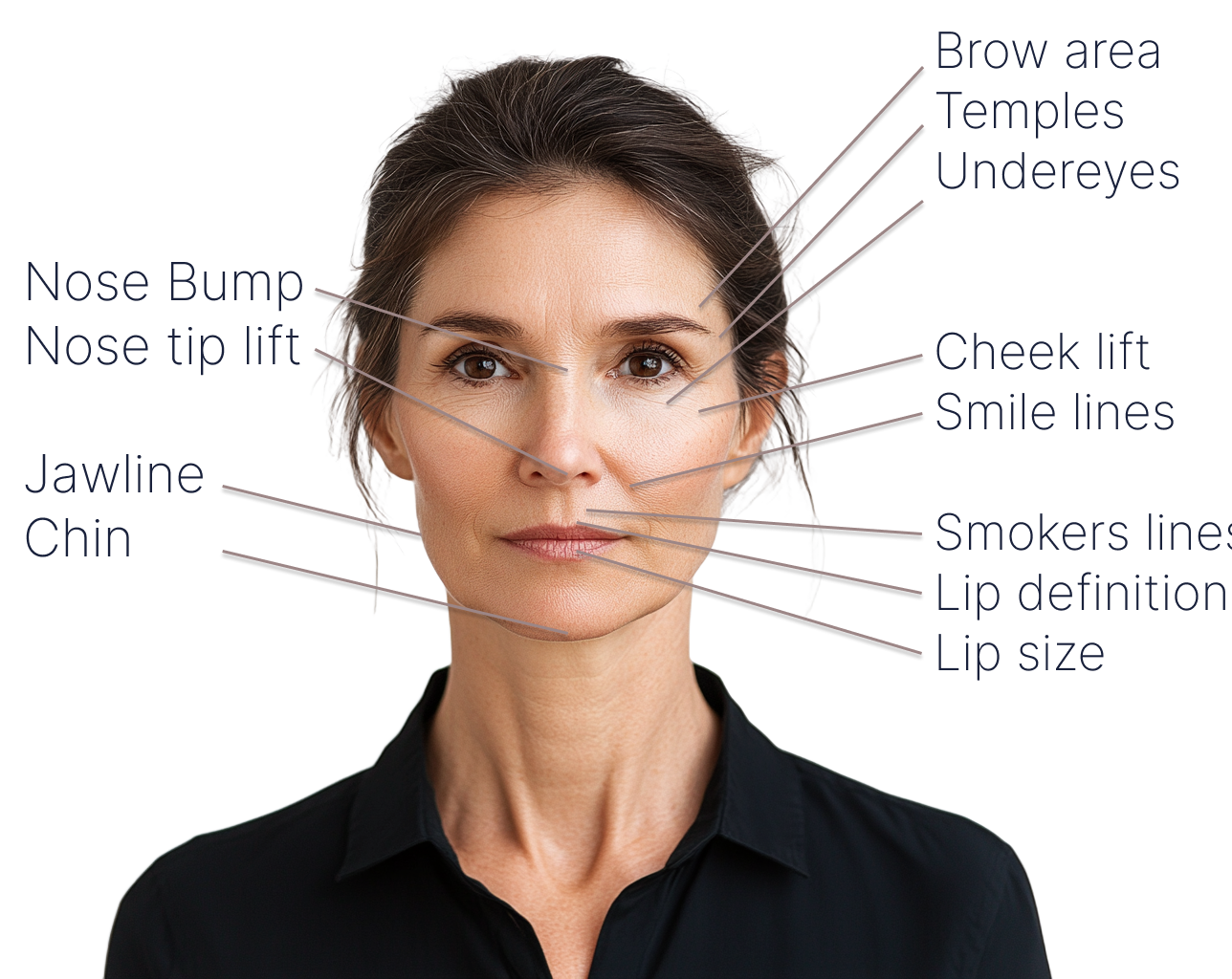
The five areas filler treats — and what each one really involves
“Dermal fillers” is an umbrella, and the area of the face changes almost everything: the technique, the product, the risk profile, the result. Here’s the honest area-by-area version.
Lips. The area most people ask about first — and arrive with the firmest ideas about. Good lip filler isn’t about volume first — it’s about shape, border definition and balance between the lips, then volume where it helps. Natural results come from less product placed precisely, which is why our lip filler approach starts from €750 and is built around what your lips already do well. (If your top lip disappears when you smile, the answer may be a lip flip — no filler at all.)
Cheeks. Mid-face volume is the quiet one: losing it flattens the face and deepens everything below it — nasolabial folds, jowls, under-eye shadows. Rebuilding cheek support often improves the complaints people came in about elsewhere on the face. It’s the area where “a little, well placed” does the heaviest lifting — details on our lip, cheek and jawline filler page.
Jawline and chin. One request, two opposite treatments: a soft jawline that’s lost definition needs filler along the bone; a wide, square jaw needs the opposite — relaxing the muscle that’s bulked it up. Doing the wrong one makes the other worse, which is why I assess which you actually have before recommending anything. The jawline filler vs jaw-slimming guide explains the difference, including the clench test you can do at home.
Tear troughs (under-eyes). The hardest area in aesthetics to inject and the one where candidacy matters most — if the darkness is pigment or puffiness rather than a genuine hollow, filler won’t help and can make it worse. It deserves its own careful read: our tear trough treatment page and under-eye guide cover who it suits and who it doesn’t.
The nose. Non-surgical rhinoplasty uses small, precise amounts of filler to smooth a bump, lift a tip or straighten a profile — a genuine alternative to surgery for the right small corrections, and honestly not the tool for big structural changes.
What dermal fillers cost in Dublin
Guide ranges at Amara: €750–€1,300 for lip, cheek and jawline filler, and €750–€1,400 for under-eye filler — the same figures you’ll see on our treatment pages. Where you land inside a range depends on what your face actually needs: which areas, how much product, and which product — the gels differ in firmness, lift and longevity, and the right one for a jawline is not the right one for a lip.
After assessing you at consultation we set out a clear, personalised plan and price before anything goes ahead — no pressure to proceed on the day, and sometimes the honest answer is a smaller treatment than you expected, or none at all. One thing I’d flag from the inbox: filler offered far below the going rate is rarely a bargain — why cheap dermal filler is a false economy explains exactly what gets cut to hit that price, and what fixing it later costs.
Good filler is decided before the needle appears — in what we choose to treat, and what we choose not to.
Where I won’t put filler
This is the section that decides whether you can trust the rest of the page, so it’s the one I’d read twice.
I won’t put filler where the problem isn’t volume. If your concern is actually skin quality — crepey texture, fine lines, dullness — filler under it can look heavy without fixing anything, and skin boosters or polynucleotides will do more for less. I won’t add filler on top of filler that’s already misbehaving — puffy lips, migrated product, a bluish tinge under thin skin need dissolving and a reset, not more. I won’t treat an area with active infection or inflammation. And I won’t take on a result I don’t believe in: if what you’re asking for would read as “work done” from across the street, I’ll say so — the goal is you, rested and balanced, not a different face.
Saying no is a normal part of this job. A consultation that ends in “not filler, and here’s why” is a good consultation — it’s cheaper than the alternative, and you can always come back to it.
How long filler lasts
As a general guide, most hyaluronic filler lasts somewhere between six and eighteen months, and it fades rather than switching off — your body gradually absorbs the gel. Lips sit toward the shorter end (they move constantly and take softer products), while cheeks, jawline and nose tend to hold longer, and under-eyes often the longest of all. Longevity also varies with the product chosen, the amount, your metabolism and how your body holds water.
Practically, that means a review rhythm rather than a schedule: we see how it settles, top up only when there’s something to top up, and adjust the plan as your face changes over the years. It’s also the quiet advantage of temporary filler — nothing has to be permanent, including your decisions.
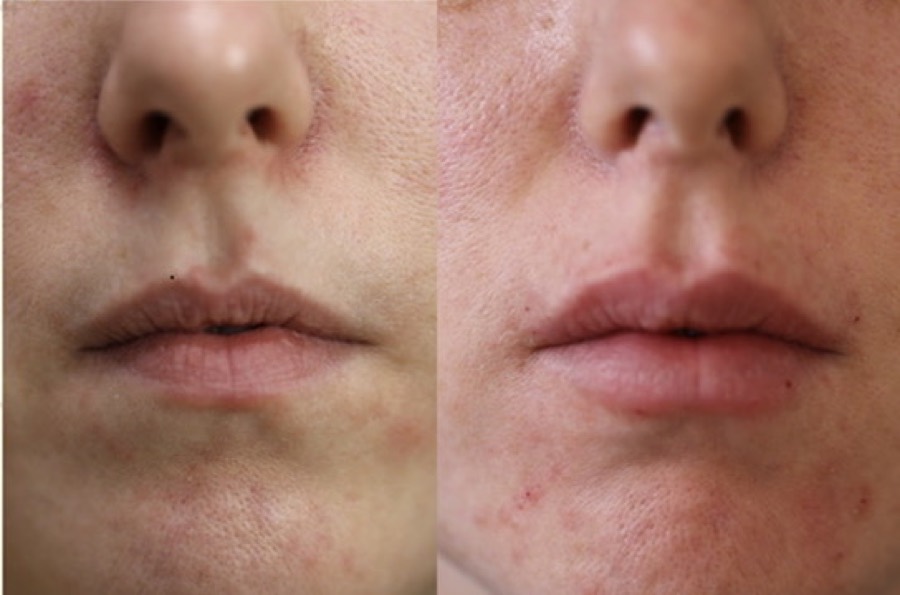
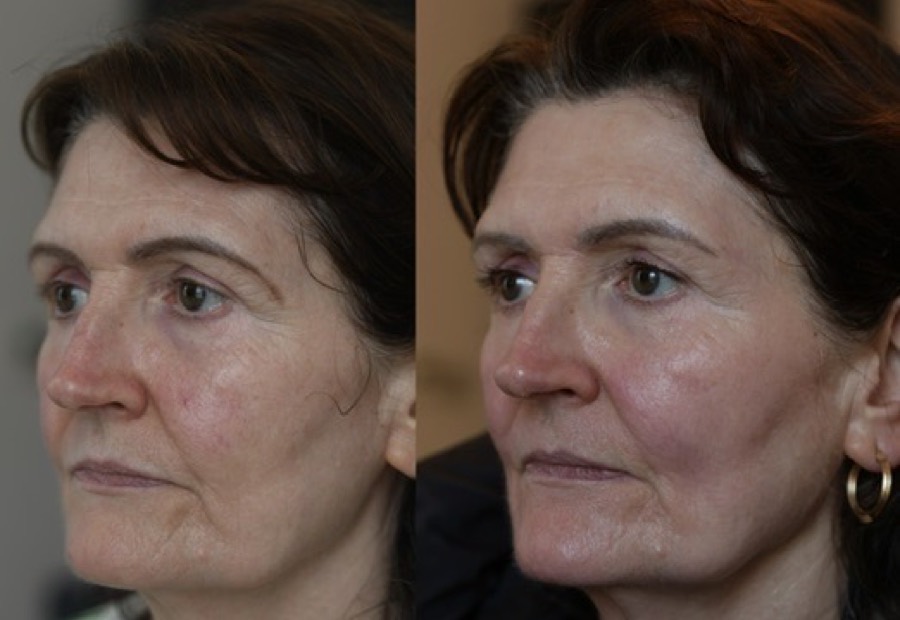
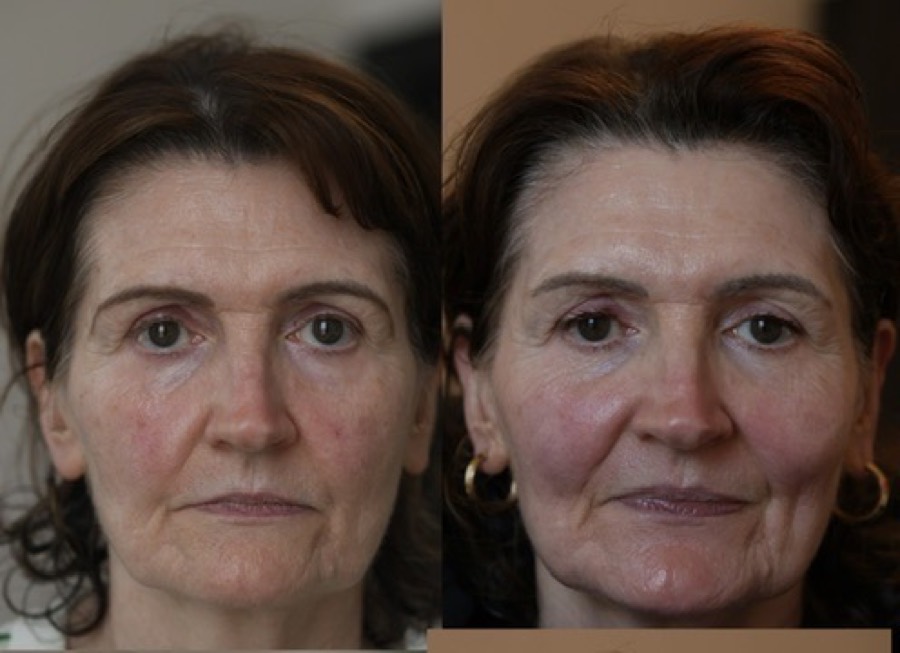
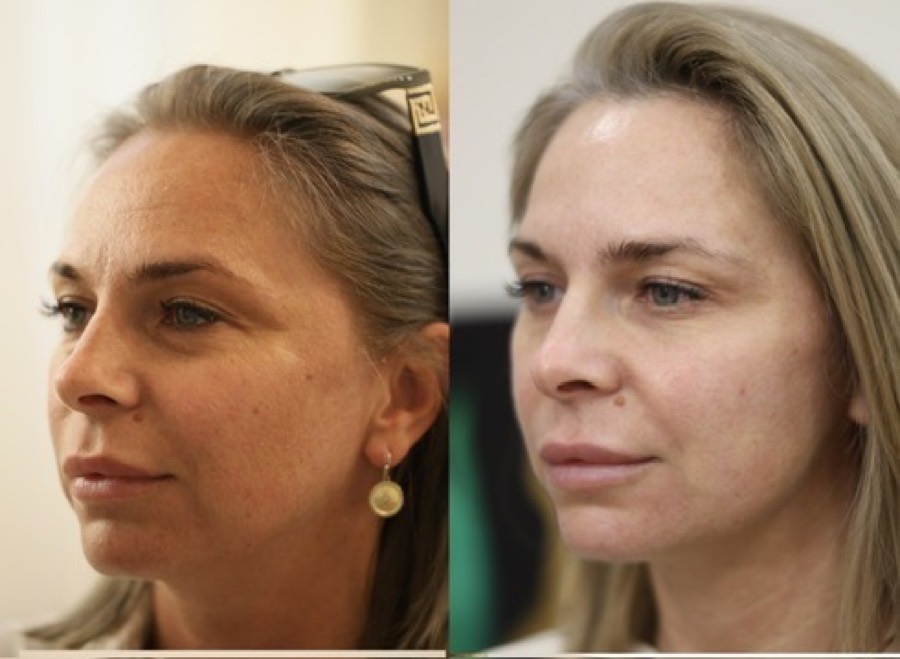
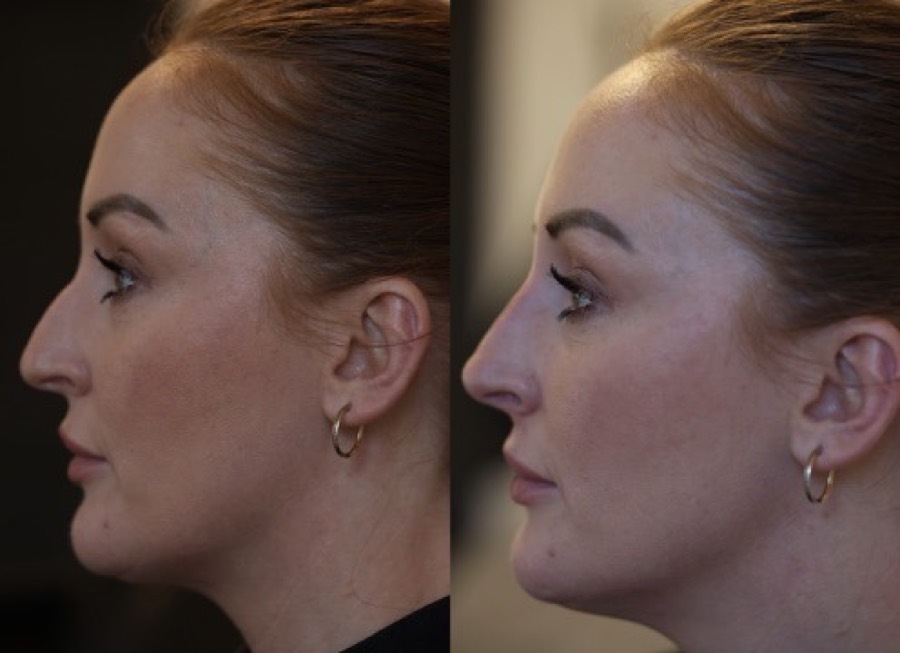
Dermal filler before & after
Real Amara patients — same angle and lighting before and after. Some results combine treatments, and the captions say which; individual results vary, and your plan is agreed at consultation.

How filler works at Amara
Everything starts with a consultation with me — not a form, not a sales chat. We look at what’s actually bothering you, assess your face honestly, and agree a plan: areas, product, amount, price. Only then does anything get booked, and treatment itself is straightforward — numbed, careful, and reviewed as it settles in the weeks after. If anything needs adjusting, it gets adjusted; if you’re ever unhappy, hyaluronic filler can be dissolved. Amara is a doctor-led clinic in Dublin, and filler is exactly the kind of treatment that reasoning exists for: judgement about where, whether and how much — before technique ever enters it.
Common questions
Are dermal fillers safe?
In experienced medical hands, filler has a strong safety record — and the specifics matter more than the reassurance. The real risk with filler is a blocked blood vessel, and avoiding it is about technique and anatomy, not luck. What filler safety actually depends on covers it properly, including the one question worth asking any injector.
Do fillers hurt?
Most people find treatment very manageable — numbing is used, most products contain anaesthetic, and the areas that matter are treated gently. Some swelling or bruising for a few days afterwards is normal, and we talk you through exactly what to expect before you decide.
Will I look overdone?
That’s the right worry to have, and it’s the one the whole plan is built around. The “done” look comes from too much product chasing the wrong goal. We plan conservatively, place precisely, and would rather under-treat and review than start heavy — you can always add; reversing is harder.
What’s the difference between filler and anti-wrinkle injections?
Filler restores volume in hollows and softens definition that’s been lost; anti-wrinkle injections relax the muscles that crease the skin when you frown, squint or smile. Lines at rest usually need filler; lines in motion usually need the injection that relaxes the movement. Many faces genuinely benefit from both — decided at consultation, not by default.
Can filler be removed?
Yes — hyaluronic filler can be dissolved with an enzyme, whether it’s work done elsewhere that needs a reset or simply a result you want gone. It’s one of the main reasons I favour hyaluronic gels.
How do I book?
Start with a consultation — book online here. You’ll get an honest view of whether filler is right for what bothers you, and a clear plan and price, before anything is booked.
The under-eye is the one filler area with its own rules — the tear trough guide explains why. If safety is your first question, read what filler safety actually depends on; if price is driving the decision, why cheap filler is a false economy is the one to read before you book anywhere. Area deep-dives: lip filler and jawline filler vs jaw slimming. Full details on our filler treatments, or start at the clinic homepage.
Consultation-first · Dublin · Warsaw · Marbella
Want my read on your face?
Start with a consultation and I’ll give you an honest, unhurried assessment — and tell you if a treatment isn’t worth it.
Start a consultation with Dr Paul →