Lip Filler in Dublin: A Doctor-Led Guide to Natural Lips


If you're searching for lip filler in Dublin, you've probably already noticed the range is enormous — from a quick, cut-price appointment to a considered, doctor-led plan. The treatment can look the same on a price list. It rarely looks the same in the mirror six months later.
At Amara, lip filler is a medical procedure, assessed and carried out with the same care as everything else we do. This guide is written to help you decide well: what lip filler actually is, what a natural result depends on, how long it lasts, and the questions worth asking before anyone picks up a needle.
What lip filler actually is
Most lip filler is a hyaluronic acid gel — a substance your body already produces to hold water and give tissue its softness. Placed carefully in and around the lip, it adds volume, restores definition to the border, and can soften fine lines at the edges of the mouth. If what you actually want is more of your top lip on show rather than more volume in it, that is a different treatment entirely — a lip flip, which uses no filler at all.
Two things are worth knowing up front. First, results are temporary — the gel is gradually broken down over months, so lip filler is a decision you get to revisit, not one you're locked into. Second, hyaluronic fillers can usually be dissolved with an enzyme if you're ever unhappy, which is a genuine safety net that not every cosmetic treatment offers.
What a natural result actually depends on
The lips people admire — soft, defined, in proportion with the rest of the face — are almost never about how much filler was used. They're about judgement. The same syringe can produce a beautiful result or an obvious one depending on three things:
- How much. The lip can only hold so much before volume spills past the natural border. Restraint is a skill, not a shortcut.
- Where. Placement — in the body of the lip versus up at the edge — decides whether you get definition or a heavy, pushed-forward look.
- Which product. Lips move constantly. The gel chosen has to suit a part of the face that never stops talking, eating and smiling.
This is why we assess your lips in proportion to your whole face rather than working to a fixed “fuller is better” template. Every face is different, and results vary from person to person.
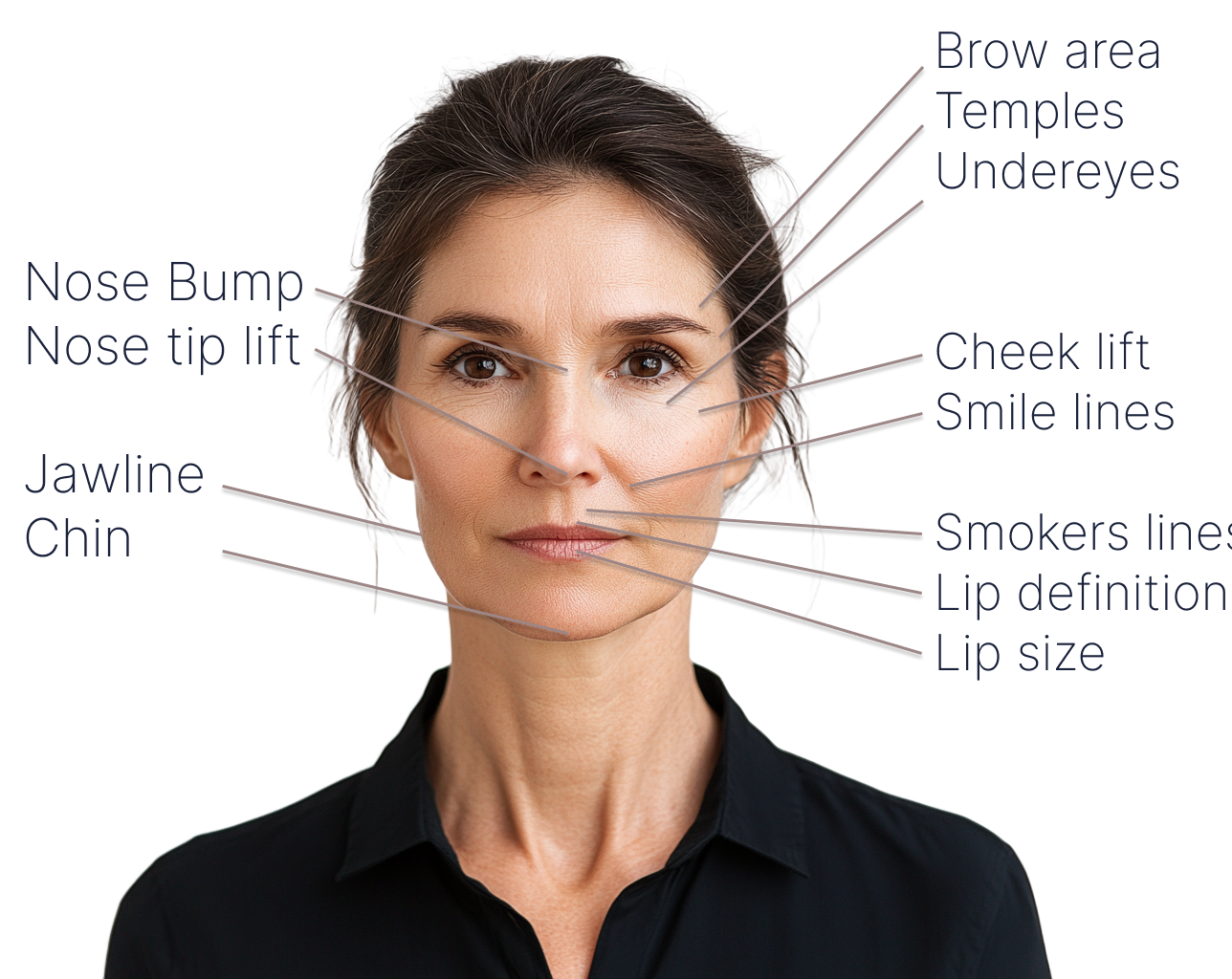
How lip filler works at Amara
Every filler journey with us starts with a consultation, not a treatment. We talk through what you'd like to change, look at your lip shape and facial balance, and give you an honest view of what will help — and, just as often, what won't. If the right answer is a smaller amount than you came in expecting, we'll tell you. Sometimes the right answer is nothing at all, and that's a legitimate outcome we're comfortable giving.
Amara is a doctor-led clinic in Dublin. That matters most on the days things aren't straightforward: managing a nervous first-timer, correcting work that's migrated, or knowing when a lip simply shouldn't have more product. Being led away from a treatment you don't need is part of what you're paying for.
If the right answer is a smaller amount than you came in expecting, we'll tell you. Sometimes the right answer is nothing at all.
How long does lip filler last?
As a general guide, lip filler tends to last somewhere in the region of six to twelve months, though it varies with the product used, the amount, and individual factors such as how quickly your body breaks the gel down. Lips are also one of the most mobile areas of the face, which is part of why they don't hold filler as long as, say, cheeks. Many people choose to top up once or twice a year to maintain the result rather than let it fully fade.
The concerns worth raising
Two questions come up in almost every consultation, and both deserve a straight answer.
“Will it migrate?” Filler that moves beyond where it was placed — sometimes seen as a faint ridge above the top lip — is usually down to too much product, placement that's too high, or the wrong gel for such a mobile area. It's far less likely when the treatment is assessed and dosed carefully. If it has already happened, a hyaluronic filler can usually be dissolved so you can start fresh.
“Will I look overdone?” That look comes from volume, not from filler itself. Our default is conservative — you can always add more at a later visit, but an over-filled lip is a harder thing to undo. We'd rather you left looking like yourself on a good day than like you'd had something done.

What lip filler costs in Dublin
Filler treatments at Amara typically start from €750 (see full pricing). We don't quote a single flat price for lip filler specifically, because a responsible price depends on what you actually need — the product and the amount vary from person to person. What we can promise is transparency: after assessing your lips at consultation, we'll set out a clear, personalised plan and price before anything goes ahead, with no pressure to proceed on the day.
Common questions
Is lip filler permanent?
No — most lip filler is a hyaluronic-acid gel that your body breaks down gradually over months, and it can usually be dissolved sooner if you'd like.
Does it hurt?
Most people find it very manageable; numbing is used and the lips settle quickly. We talk you through exactly what to expect at your consultation.
How do I book?
Start with a consultation — you can book online here, or read more on our lip filler Dublin page. We assess your lips individually and only recommend what genuinely helps.
Thinking about lip filler in Dublin?
The best lip filler decisions are made unhurried, with a clinician who's as willing to talk you out of a treatment as into one. If you'd like a considered, doctor-led view on whether lip filler is right for you, book a consultation at Amara. We'll assess your lips individually, answer your questions honestly, and only recommend what genuinely helps.
Amara is a doctor-led aesthetic clinic in Dublin. Lip filler is a medical procedure; results vary from person to person and every treatment is assessed individually at consultation. This article is general information, not medical advice.
Two things worth reading before you book anywhere: what lip filler migration actually is, because it is the fear I hear most often and it is usually preventable, and why cheap filler is a false economy. If safety is your main question, I answer it here. Full details on our filler treatments page, or start at the clinic homepage.
Consultation-first · Dublin · Warsaw · Marbella
Want my read on your face?
Start with a consultation and I’ll give you an honest, unhurried assessment — and tell you if a treatment isn’t worth it.
Start a consultation with Dr Paul →