anti wrinkle injections Dublin
Anti-Wrinkle Injections in Dublin: Cost & Clinic Guide
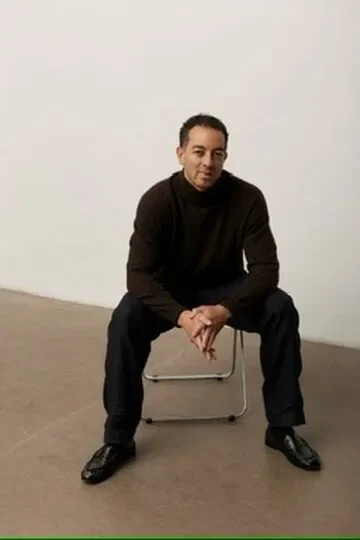

Two questions come up in almost every first consultation I do in Dublin: what does it cost, and how do I know I'm in the right place? They're fair questions, and most of what's written online answers neither of them honestly. So here is what I actually tell patients — the real numbers, and the things I'd want to know if I were the one sitting in the chair.
What anti-wrinkle injections actually are
Anti-wrinkle injections use a purified protein to soften the action of a specific muscle. They don't fill anything in and they don't tighten skin. If a line appears when you move — frowning, raising your eyebrows, smiling — that line is being created by a muscle, and relaxing that muscle softens it. If a line sits there when your face is completely still, it's a different problem, and injections alone are usually the wrong answer. That distinction is most of what a good assessment is for. The same principle reaches beyond lines: a wide lower face caused by a large jaw muscle is slimmed the same way — I've written separately about masseter treatment for jaw slimming and teeth grinding, including its honest limits. The mirror-image complaint — a jawline with no width to take away in the first place — is a filler question, and I have set out how to tell the two apart in jawline filler or jaw slimming.
One thing worth being clear about, because a lot of Irish advertising blurs it: this is a prescription-only medicine. Prescription-only medicines cannot be advertised to the public in Ireland at all — which is why you will never see us name a product — and the medicine has to be prescribed for you individually by a qualified prescriber. Medical Council prescribing guidance is clear that this means assessing you face to face; it should not be prescribed remotely, or on the basis of a form you filled in online. If a clinic is willing to skip that step, that tells you something important about everything else they do.
What it costs in Dublin
At Amara, a first area is €400, two areas are €500, and each additional area after that is €50. So the more we treat in one sitting, the less each area effectively costs — and that is deliberate. Most of what you are paying for is the assessment and the precision of the injecting, not the amount of product, so once the difficult part is done, adding an area is a small step. A consultation with me is €100 — a €50 deposit to book and €50 at the clinic — and if you go ahead with treatment on the day the full €100 comes off it, so the assessment itself costs you nothing. The full list is on the prices page, and it is deliberately public — you shouldn't have to book a call to find out what something costs.
Across Dublin you'll see a wide spread, and it's worth understanding what actually drives it. Price differences usually come down to three things: who is injecting and what they're qualified to do, how much product is being used, and how many areas are being treated. The first two are the ones that matter, and they're the two least visible on a price list. The third is worth understanding before you compare quotes at all: most people are thinking of one or two areas, and there are considerably more on the table than the frown line they came in for.
Why the cheapest quote is rarely the real one
You'll notice we don't charge a flat rate per area, and the reason is worth understanding, because it explains a lot about how this treatment is priced everywhere. The real cost isn't the product in the vial — it's the assessment, the anatomical knowledge, and the precision of the injecting. That's why our first area carries most of the cost and further areas are modest: the hard part has already been done. So when you see a clinic pricing every area the same, or pricing suspiciously low across the board, it's worth asking where the saving is coming from — because an "area" isn't a standardised unit, and the amount of product used is a genuine cost. If a price is well below everything around it, that product has to come from somewhere, and it is usually the dose.
An underdosed treatment is not a bargain. It fades early, it often doesn't do what you came in for, and you end up paying again sooner. I've written separately about why the 'standard' dose is usually wrong — the short version is that dosing should follow your muscle strength and your anatomy, not a menu. A strong frown muscle in a 35-year-old man and a delicate one in a 55-year-old woman are not the same job, and pricing them identically is a sign that nobody is really looking. Men get caught by this more often than anyone, and not only on dose — a man's face needs a different plan altogether, not a scaled-down version of a woman's.
The more useful question isn't "what's the cheapest quote?" It's "how long does this result actually last, and how many times a year will I be paying for it?"

How to choose a clinic in Dublin
These are the things I'd genuinely check, in order:
- Who assesses you, and who injects you. Ask directly. Ask whether the person injecting is the person prescribing. In a doctor-led clinic those are the same person, and that continuity matters when something needs judgement rather than a protocol.
- Whether the consultation happens before the treatment. Not on the same table, five minutes beforehand — actually before. If the assessment can only ever end in a treatment, it isn't an assessment.
- Whether they'll tell you no. This is the one I'd weight most heavily. A good clinic turns work away. If you've come in for something that won't help you, or you're too early for it, or the real issue is skin quality rather than muscle movement, you should be told that plainly.
- Whether prices are published. Not because cheap is good, but because a clinic confident in its pricing doesn't hide it behind a phone call designed to sell you.
- What happens if something isn't right. Ask what the review policy is. Faces are asymmetric and occasionally a result needs adjusting at the two-week mark; a clinic that has thought about this will have a clear answer.
What I'd weight far less: before-and-after galleries. They show you the clinic's best days, they're taken under controlled lighting, and results vary considerably from person to person. They tell you almost nothing about what your face will do.

What actually happens on the day
The treatment itself is quick — usually ten to fifteen minutes once we've agreed a plan. The needles are very fine and most patients describe it as a series of brief stings rather than anything they'd call painful. You can go back to work afterwards. You may have small raised bumps at the injection points for a short time, and bruising is possible, particularly around the eyes.
Nothing happens immediately. Movement typically starts to soften from around day three to five, and the full effect settles at about two weeks — which is why any review appointment should be at two weeks, not two days. For most people the effect then lasts in the region of three to four months before movement gradually returns, though this varies with the area treated, the dose used, and how strong the muscle is.
Afterwards: stay upright for a few hours, skip the gym, sauna and heavy alcohol that day, and don't rub or massage the treated area for the rest of the day.
When it isn't the right treatment
Anti-wrinkle injections are not for everyone, and they're not the answer to everything. They shouldn't be used if you're pregnant or breastfeeding, if you have a known allergy to the medicine, if there's active infection or inflammation at the injection site, or if you have certain neuromuscular conditions such as myasthenia gravis. Some medications — certain antibiotics among them — can interact with it too. That's part of what the consultation is for, so bring your medication list. It's also an adults-only treatment: we don't treat anyone under 18 for cosmetic indications.
More commonly, though, the issue is simply that the problem isn't a muscle problem. Hollowing and volume loss need a different approach. Crepey, sun-damaged or dull skin is a skin-quality problem, and no amount of muscle relaxation will fix it. Heavy, sagging tissue past a certain point is a structural issue that injections will not lift. The lips are where the call goes both ways: a lip that has never had volume needs filler, but a top lip that disappears when you smile is a muscle problem these injections can flip — the lip flip versus filler distinction is worth understanding before booking either. A significant part of my job is redirecting people — sometimes toward something else entirely, sometimes toward nothing at all for now.
If you're not sure which of those describes you, that is exactly what a consultation is for. Our short treatment quiz is a reasonable starting point, but it's not a substitute for someone looking at your face.
Common questions
How much are anti-wrinkle injections in Ireland?
At our Dublin clinic, a first area is €400, two areas are €500, and each additional area is €50 — so a typical treatment lands between €400 and €600 depending on how many areas we treat. Prices elsewhere in Ireland vary, and the variation usually reflects the dose used and who is performing the treatment rather than anything about the medicine itself.
How long do the results last?
Typically around three to four months, though this genuinely varies between people and between areas. Strong muscles and larger areas tend to recover movement sooner. Results vary, and no one can promise you a specific duration.
Will I look frozen?
That's a dosing and placement decision, not an inevitable property of the treatment. If you want to retain expression, say so at the consultation — it's a completely reasonable thing to ask for and it changes how I'd plan the treatment.
Is it safe?
It has a long track record when it's prescribed appropriately, dosed correctly, and injected by someone who understands the anatomy. Side effects are usually minor and temporary — bruising, tenderness, occasionally a temporary droop if product moves where it shouldn't. Rarely, effects can extend beyond the treated area: if you ever developed difficulty swallowing, speaking or breathing, or a change in vision after treatment, that warrants urgent medical attention. It is uncommon, but you should know it exists, and you should always know who to ring. The way you reduce that risk is by choosing who does it carefully, which is most of the point of this article.
Do I need a consultation first?
Yes. It's a prescription-only medicine, so it has to be prescribed for you individually — and under Irish Medical Council prescribing guidance that means a face-to-face assessment before any prescription is written, not a form or a video call.
Related at Amara
- Anti-wrinkle injections at Amara
- Masseter (jaw slimming) anti-wrinkle injections
- Excessive sweating (hyperhidrosis) treatment
- The classic anti-wrinkle areas — and what's beyond them
- Why the 'standard' dose is usually wrong
- Treatment prices
About Dr Paul
 I'm Dr Paul Munsanje — a medical doctor with over 17 years in aesthetic medicine, running a doctor-led clinic across Dublin, Warsaw and Marbella. My work is built on facial anatomy, precision and restraint: treating where it genuinely helps, and just as readily talking you out of what you don't need. This journal is where I write down honestly what I tell my patients.
Consultation-first · Dublin · Warsaw · Marbella
Want my read on your face?
Start with a consultation and I’ll give you an honest, unhurried assessment — and tell you if a treatment isn’t worth it.
Start a consultation with Dr Paul →