anti-wrinkle injection areas
Anti-Wrinkle Injection Areas: Classic to Advanced
Most people who come to me for anti-wrinkle injections are thinking of one thing: smoothing out a frown line. That's a perfectly good place to start, but it's a small part of what's actually possible. In my clinic, I divide the face into what I'd call the standard areas and the advanced areas — and the gap between the two surprises almost everyone.
The classic three: where nearly everyone starts
There are a number of basic, or standard, areas for anti-wrinkle injections. I call them standard because they're the most popular, the most tried and tested, and the ones with the longest track record. They are:
- The "11s" — the vertical lines that form between the eyebrows when you frown
- Worry lines across the forehead
- Smile lines at the side of the eyes, often called crow's feet
These three areas cover the upper third of the face, and for most patients, treating them is where a first consultation begins. They're predictable, well studied, and a good introduction to how muscle-relaxing injections actually work — by softening the action of the muscle that's creating the line, not by filling anything in.

Beyond the classic three: the advanced areas
Once patients understand the basics, I often explain that there's a whole second tier of areas where we can use the same muscle-relaxing injections to change how the face moves — and, in some cases, how it functions. Underneath the eye can be treated. The side of the nose can be treated for what are called bunny lines, the little creases that appear when you scrunch your nose. That same area, treated differently, can also help with a gummy smile, where too much gum is visible when you smile.
The lips are another advanced area, and I treat them for two quite different reasons: to soften smoker's lines around the mouth, or to create a subtle lip flip, which reveals a little more of the top lip without adding any volume. The chin is one I see often too — some people develop dimpling, or what's called peau d'orange (French for "orange peel skin"), and this area responds well to treatment.
Areas that change how your face moves — not just how it looks
Some of the advanced areas go further than softening a line — they change the mechanics of the face. There's a small depressor muscle near the corners of the mouth called the depressor anguli oris. When it's overactive, it pulls the corners of your mouth down and can leave you looking sad or stern even when you're not. Treating it lifts the mood of the mouth again. In a similar way, there are depressor muscles that pull the eyebrows down — weaken those, and the eyebrows lift.
Then there's the masseter, the muscle of mastication — the one you use to chew. Weakening it a little can slim the lower face, and it's also genuinely useful for people who suffer with bruxism, easing the pain that comes from clenching and grinding. The neck can be treated too, in what's known as a Nefertiti neck lift, where weakening the muscles that pull the neck downward allows the jawline and neck to lift — though the muscle is only one of three things that produce an ageing neck, and it is worth knowing which one you have. And prescription muscle-relaxing injections aren't limited to the face — I also use them to adjust the shape of the shoulders, and to treat excessive sweating under the arms, on the palms, or on the feet.
Why a consultation comes before any of this
I list all of this not to suggest everyone needs it, but because most patients simply don't know it's on the table. In my Dublin clinic, the conversation always starts with an assessment, not a treatment plan — I want to understand what's actually bothering a patient before I recommend anything. Some people come in wanting six areas treated and leave with a plan for one. Others come in only thinking about a frown line and discover that what's really ageing their look is a downturned mouth or a heavy brow. Talking to a doctor is the best way to figure out what options, if any, will genuinely work for you.
And if you're weighing this up and want the practical detail first — what each area costs, what actually happens on the day, and the questions I'd ask a clinic before booking anywhere — that's all set out in my guide to anti-wrinkle injections in Dublin.
Common questions
Are the advanced areas riskier than the standard ones?
They require more precise anatomical knowledge — areas like the lips, the masseter, or the neck sit closer to structures you need to understand well before treating. That's exactly why I think these should only ever be done by a doctor who has assessed you in person, rather than treated as an add-on. The masseter is also the area people most often ask for by the wrong name, because a heavy jaw and a soft jaw need opposite treatments — I have written on jawline filler versus jaw slimming, and how to tell which one you need.
Will treating my masseter muscle stop me chewing properly?
No — the aim is to weaken the muscle a little, not switch it off. Most patients notice the slimming effect and, if relevant, less jaw pain from clenching, while still eating and chewing completely normally.
What exactly is a Nefertiti neck lift?
It's a way of using muscle-relaxing injections along the jawline and neck to weaken the muscles that pull the neck downward, which allows the jawline and neck to sit in a more lifted position — without surgery.
Related at Amara
About Dr Paul
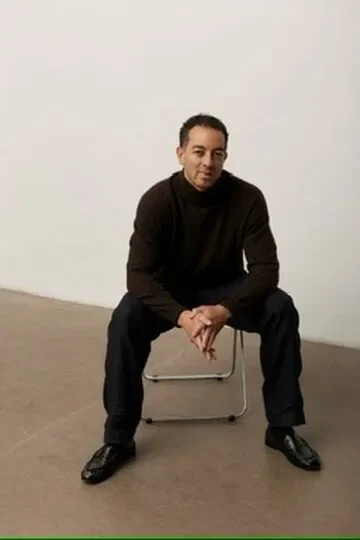
 I'm Dr Paul Munsanje — a medical doctor with over 17 years in aesthetic medicine, running a doctor-led clinic across Dublin, Warsaw and Marbella. My work is built on facial anatomy, precision and restraint: treating where it genuinely helps, and just as readily talking you out of what you don't need. This journal is where I write down honestly what I tell my patients.
Consultation-first · Dublin · Warsaw · Marbella
Want my read on your face?
Start with a consultation and I’ll give you an honest, unhurried assessment — and tell you if a treatment isn’t worth it.
Start a consultation with Dr Paul →