acne treatment Dublin
Acne Treatment in Dublin: Breakouts, Marks and Scarring

Almost everyone who comes to us about acne is really asking about two different problems at once: the breakouts happening now, and the marks the last few years of breakouts left behind. They need different treatments, on different timescales, and confusing them is the single most expensive mistake we see people make with their skin.
This guide separates them. What actually helps congested, breakout-prone skin; what helps the marks and the scarring; when the answer is a doctor and a prescription rather than a facial; and what any of it costs in Dublin.
First: which of the three problems do you have?
This sounds like a pedantic distinction. It isn't — it decides everything that follows, and getting it wrong is why people spend a lot of money without much changing.
Active breakouts. Skin that is currently producing spots: congestion, blackheads, whiteheads, inflamed papules, or deeper painful lumps. The job here is to reduce what's happening now. Depending on severity, that's either a skincare and in-clinic routine, or it's medical care.
Post-inflammatory marks. The flat brown, purple or red patches left where a spot used to be. Run a finger over them and the skin is smooth — the colour has changed but the surface hasn't. Brown marks are post-inflammatory hyperpigmentation; red or purple ones are post-inflammatory erythema, essentially lingering dilated vessels.
True scarring. A genuine change in the skin's surface: the small pits people call ice-pick scars, wider shallow depressions, rolling undulations that show up in side light, or raised thickened scars. This is lost or disordered collagen, and it does not resolve by itself.
The distinction that saves people the most money
Marks fade. Scars don't.
Post-inflammatory marks are your skin's colour response to inflammation, and in most people they resolve on their own — often over three to twelve months, sometimes longer in deeper skin tones where the pigment response is stronger. They will fade faster if you protect them from sun, and they will last considerably longer if you don't. Daily SPF genuinely does more for this problem than most treatments sold for it.
True scarring is a structural change and will still be there in five years. That's the one that justifies a resurfacing treatment aimed at the scar itself.
The practical test: look at your face in strong side lighting, from an angle rather than head-on. Flat discolouration largely disappears when the light rakes across the skin. Texture becomes more obvious. If what bothers you vanishes in side light, you have a pigment problem, and a treatment aimed at collagen is the wrong tool.

Most people who come in asking about acne scarring don't have acne scarring. They have marks that were always going to fade — and a treatment plan aimed at the wrong problem.
When acne needs a doctor rather than a facial
This is the part of the conversation aesthetic clinics tend to skip, so let's be direct about it.
If your acne is moderate or severe — widespread inflamed spots, deep tender lumps under the skin, cysts, acne that is already leaving pitted scarring, or acne that is affecting how you feel day to day — the treatment that will help you most is medical treatment, and that means a prescription. There are effective prescription options in Ireland for exactly this, and a doctor who examines you can advise which is appropriate for your skin. No facial, peel or device is a substitute for that, and anyone telling you otherwise is selling.
Amara is a doctor-led clinic, so that's a conversation you can have here rather than being sent somewhere else. Your own GP can equally manage it, and often that's the simplest route — particularly if your acne has been going on for years and you already have a doctor who knows your history. The point isn't where you go. It's that a facial is the wrong tool for the job, and you shouldn't be paying for a course of them while the acne is still active.
There is also a timing reason to get the medical side sorted first. Treating active inflammatory acne with resurfacing can aggravate it, and scar treatment works far better once the skin has stopped making new spots. Repairing scarring while new lesions are still forming means treating a moving target.
So the honest sequence is: get the acne itself under control, then treat what it left behind. We'd rather tell you that than take your money at the wrong point in the process.

What we actually use, and for what
Measuring before treating: the VISIA scan
Every skin plan at Amara starts with a VISIA skin assessment, and it's free. It photographs your skin in visible, UV and cross-polarised light and scores eight dimensions against people your age — including pores, texture, and porphyrins, which relate to the bacteria that live in congested follicles.
For acne-prone skin, that last point is the useful one: the scan separates what's genuinely congestion from what's pigment, and shows sun damage that hasn't yet surfaced. It takes about thirty minutes, there's no obligation, and it's the first tier of our Skincare Bootcamp. If a treatment isn't right for your skin, this is where we say so.
Congestion and blackheads: HydraFacial
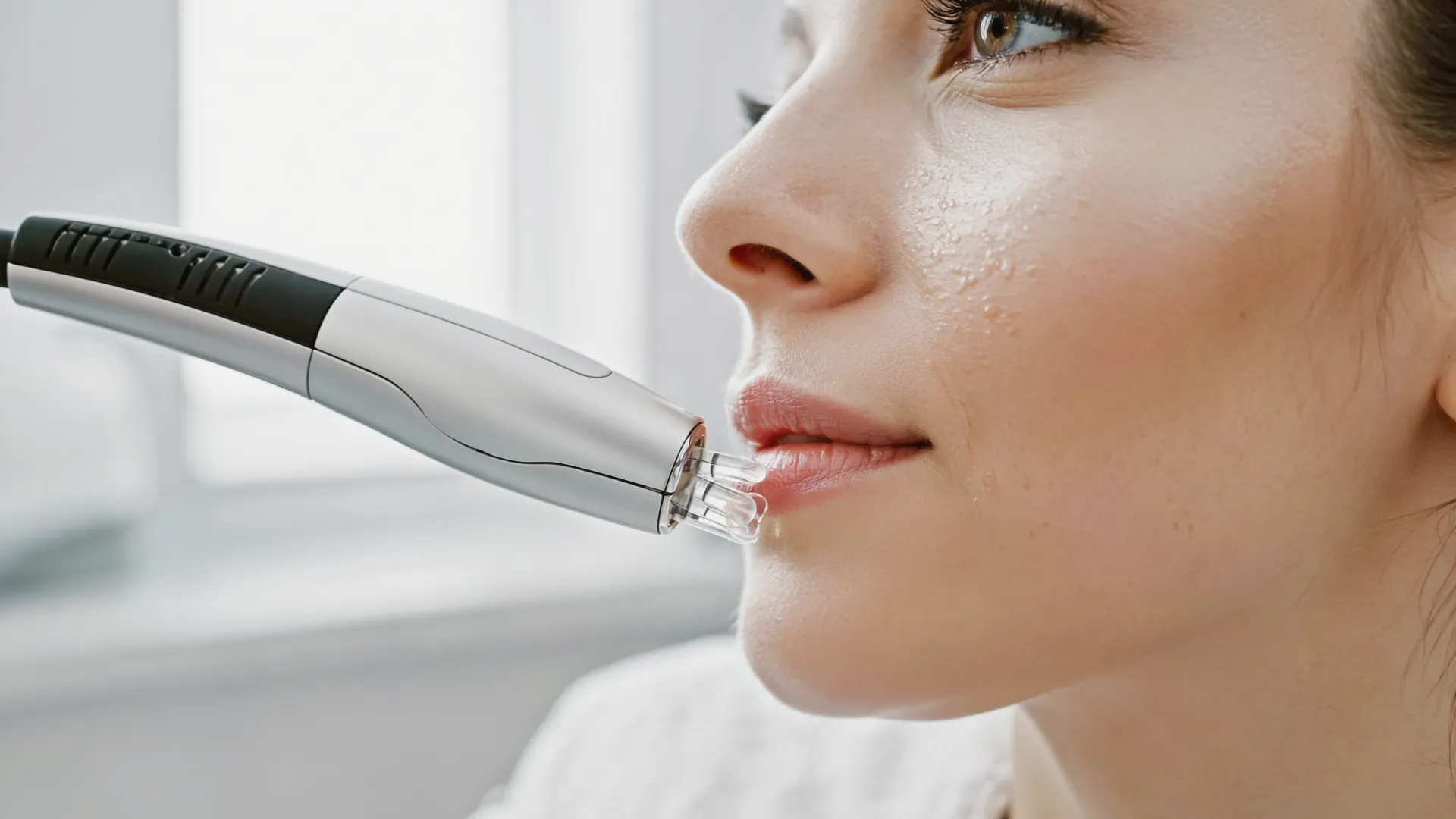
A HydraFacial is a multi-step treatment — cleanse, exfoliation, a gentle acid step, vacuum extraction, then hydration — that takes about thirty minutes with no downtime. For skin that's congested rather than medically acneic, it does the mechanical job well: it clears the pores of the debris that turns into blackheads and whiteheads.
What it does not do is change how much oil your skin produces or stop new spots forming. It's maintenance for congestion, not a cure for acne, and it works best as a regular routine rather than a one-off — which is why it's usually priced as a course.
Texture and breakout-prone skin: BioRePeel
BioRePeel is a 35% TCA peel in a two-phase buffered formula, designed to stimulate the deeper layers while only micro-exfoliating the surface — so it doesn't produce the week of visible flaking a traditional peel does. Its useful applications include acne-prone and congested skin, uneven tone and mild pigmentation.
It layers well with a HydraFacial in the same visit — deep cleanse first, then the peel — and that combination is the one we most often recommend for congested skin. A course of three to four sessions is typical.
True scarring: RF microneedling
For genuine textured scarring, the treatment that makes a real difference is radiofrequency microneedling. Fine needles create controlled micro-injuries and deliver radiofrequency energy into the deeper skin, prompting a wound-healing response that lays down new collagen where the scarring removed it. We can add exosomes to support recovery.
This one is a genuine course treatment, not a single appointment — typically four sessions, spaced out, with the result building over months rather than weeks as collagen remodels. There's real downtime: redness and a sandpapery texture for a few days. It's the most effective option we have for rolling and shallow depressed scarring. Deep ice-pick scars often respond only partially, and are sometimes better addressed by a dermatologist using techniques we don't offer. If you want the detail on how the device works, we've written about it in our guide to microneedling in Dublin.
What you do at home matters more than any of it
Unglamorous, but true: for both breakouts and marks, a consistent home routine outperforms occasional in-clinic treatment. Daily broad-spectrum SPF is the single highest-value thing you can do for post-inflammatory marks, because UV exposure actively darkens and prolongs them. Beyond that, the right actives for your skin — and, just as importantly, not stacking too many at once — is what your plan should cover. We stock ZO Skin Health and will build the routine around what the scan showed rather than around what we'd like to sell you. For oily, congestion-prone skin the workhorse is usually a salicylic-acid pad — the Oil Control Pads at 2% for genuinely oily skin, or the gentler Complexion Renewal Pads if your concern is more about how your pores look.
What to expect, and who these treatments aren't for
None of these are risk-free, and you should hear that before you book.
- Purging. Exfoliating treatments and new actives can bring congestion to the surface faster in the first few weeks. It settles, but it's worth knowing in advance rather than being alarmed by it.
- Redness and irritation. Expected after peels and microneedling — hours after a HydraFacial or BioRePeel, several days after RF microneedling, along with dryness and flaking.
- Pigmentation risk. Any treatment that inflames the skin can itself cause post-inflammatory hyperpigmentation, and that risk is meaningfully higher in deeper skin tones. It's the main reason we assess before treating, adjust intensity, and insist on sun protection afterwards.
- Infection and, rarely, scarring. Uncommon with proper technique and aftercare, but not impossible with any treatment that breaks the skin.
- Not suitable during active inflammatory acne. We won't microneedle skin that's actively breaking out in inflamed lesions — it risks spreading inflammation and making things worse.
- Tell us about prescription treatment. If you're taking, or recently finished, prescription medication for acne, say so. It changes both what's safe and how long we should wait before resurfacing.
- Also flag: pregnancy or breastfeeding, active skin infection or cold sores, a history of keloid scarring, or blood-thinning medication. Any of these may change what we recommend or rule a treatment out.
Results vary from person to person, and no treatment can promise a particular outcome for your skin.
What it costs in Dublin
Our prices for the treatments above:
- VISIA skin assessment — free. Thirty minutes, a personal skin plan, no obligation.
- HydraFacial — from €140 as a single treatment, up to €280 for the most advanced version; from €99 a session when booked as a course.
- BioRePeel — €159 on its own, or €120 added to a HydraFacial in the same visit.
- RF microneedling — from €350 for a single face treatment, €200 a session in a course of four; up to €800 for larger areas or with exosomes.
- Doctor consultation — €100 (€50 deposit to book, €50 at the clinic), fully redeemed against treatment on the same day. Only needed if your plan involves a doctor.
Full ranges are on the Amara price list. For a skin concern like this you don't need to start with a paid consultation — the free skin assessment is the right first step, and it's where we'd point you.
One thing worth saying about cost: scarring treatment is a course, and the honest number is the course total, not the single-session price. Ask any clinic quoting you for the full plan and how long the result is expected to hold.
How we decide, in practice
We scan first. The VISIA gives us numbers instead of impressions, and it frequently reframes the conversation — people arrive convinced they need scar treatment and the scan shows pigment, or they've written off their skin as “just oily” and the scan shows sun damage doing most of the visible damage.

Then we sequence. If acne is still active and it's beyond what skincare will settle, the first recommendation is the medical route rather than a course of facials — with our doctor, or with your GP if that suits you better. If it's congestion, we start with a routine and a HydraFacial or peel plan. If the acne is genuinely quiet and what's left is texture, we plan a microneedling course — and we'll be straight with you about how much of it we expect to improve, because “significantly better” is realistic and “gone” usually isn't.
Part of what you're paying a clinic for is being told when the treatment you came in asking for isn't the one that will help you.
Common questions
Can a facial cure acne?
No. A HydraFacial or peel can clear congestion and help skin that's prone to blackheads and mild breakouts look and feel better, but it doesn't change oil production or stop new spots forming. Persistent, inflamed or cystic acne is a medical condition and needs a doctor and prescription treatment. Amara is doctor-led, so you can have that assessed here, and your own GP can manage it too.
Are my acne scars actually scars?
Often not. If the marks are flat and only a change in colour — brown, red or purple — they're post-inflammatory marks, and in most people they fade on their own over several months to a year. Only a change in the skin's surface texture, visible in side lighting, is true scarring. A skin scan will tell you which you have.
What's the best treatment for acne scarring?
For depressed, rolling and shallow textured scarring, radiofrequency microneedling as a course of about four sessions is the most effective option we offer, with results building over months as collagen remodels. Deep ice-pick scars respond less well and are sometimes better handled by a dermatologist. Results vary from person to person.
Can I have treatment while my skin is still breaking out?
Gentle congestion-focused treatment, often yes. Resurfacing, generally no — we won't microneedle skin with active inflamed lesions, because it risks aggravating the acne, and scar treatment works far better once new spots have stopped forming. Getting the acne quiet first is part of the plan, not a delay to it.
How long do post-acne marks take to fade?
Typically three to twelve months, and longer in deeper skin tones where the pigment response is stronger. Daily sun protection makes a real difference to how quickly they go, because UV exposure darkens and prolongs them.
How do I start?
Book the free VISIA skin assessment. You'll see your skin measured properly and leave with a plan — including, if that's the honest answer, treating the acne itself medically first, here or with your GP, before we touch the marks it left behind.
If your main concern is texture rather than active breakouts, what microneedling actually does for your skin is the more useful read — and if you are weighing up injectable skin treatments, I compare them in skin boosters, polynucleotides and filler. The assessment itself is free: you can read about Hydrafacial in Dublin or start from the clinic homepage if you are not sure where you fit yet.
Skin health · Doctor-led clinic · Dublin
Want a skin plan that actually fits?
Book a skin consultation with our therapist for a proper skin assessment and a plan built around your skin — no pressure, no upselling.
Book a skin consultation →